When I first dipped my toes into the world of electric vehicles, the sheer volume of technical jargon felt like trying to read a chemistry textbook in a foreign language. Lithium-ion, NMC, LFP, NCA, cathode, anode, electrolyte… it was overwhelming. I remember poring over spec sheets, convinced that if I just understood the chemistry better, I’d somehow unlock the secret to picking the perfect EV. The truth, in my experience, is that focusing too much on the specific battery chemistry – NMC vs. LFP, for instance – often fails most people when making a real-world buying decision. It leads to analysis paralysis, unnecessary worry, and a distorted view of what truly impacts your EV ownership experience.
Automakers and industry pundits love to talk about the latest battery breakthroughs, and while these advancements are critical for the industry, they’re often presented in a way that doesn’t translate to practical benefits for the average driver. You’re left wondering: Does a different cathode material really mean my road trip will be better? Will this new electrolyte formulation make my battery last longer in harsh winters?
What I’ve learned from countless test drives, ownership experiences, and conversations with actual EV owners is that while chemistry dictates the fundamental characteristics, it’s the engineering and integration around that chemistry that determines your daily experience. It’s about the pack design, thermal management, software, and the overall vehicle architecture. Understanding these practical outputs is far more valuable than memorizing chemical acronyms. Let’s peel back the layers and see what truly matters.
Key Takeaways
- Focusing on specific battery chemistry (NMC, LFP) is often less important for consumers than understanding real-world performance metrics.
- Battery pack design, thermal management, and software optimization are more critical to your EV experience than the raw chemistry.
- Prioritize a vehicle’s charging curve, usable range, and warranty terms over detailed chemical specifications.
- Embrace the industry’s shift towards diverse chemistries as a sign of progress, not a source of confusion.
The Overemphasis on NMC vs. LFP: Why It Misses the Point for Drivers
For years, Nickel Manganese Cobalt (NMC) batteries were the gold standard for long-range EVs, lauded for their high energy density. More recently, Lithium Iron Phosphate (LFP) batteries have made a significant comeback, especially with brands like Tesla and Ford incorporating them into their standard range models. This has led to endless debates among enthusiasts about which is ‘better.’ The mistake I see most often is getting caught in this tribalism. For most drivers, the choice between NMC and LFP is largely irrelevant when it comes to the daily grind of driving and charging.
What changed everything for me was realizing that the implications of the chemistry are what matter, not the chemistry itself. For example, LFP batteries typically have a flatter discharge curve, meaning the available power doesn’t drop off as steeply as the state of charge decreases. This can translate to a more consistent driving experience at lower battery percentages. More importantly, LFP batteries are generally more durable when charged to 100% regularly, which is fantastic for daily use and simplifying your charging routine – no more ‘only charge to 80%’ anxiety. On the other hand, NMC batteries still tend to offer higher energy density, meaning more range for a given weight or volume, which is crucial for longer-range luxury or performance EVs.
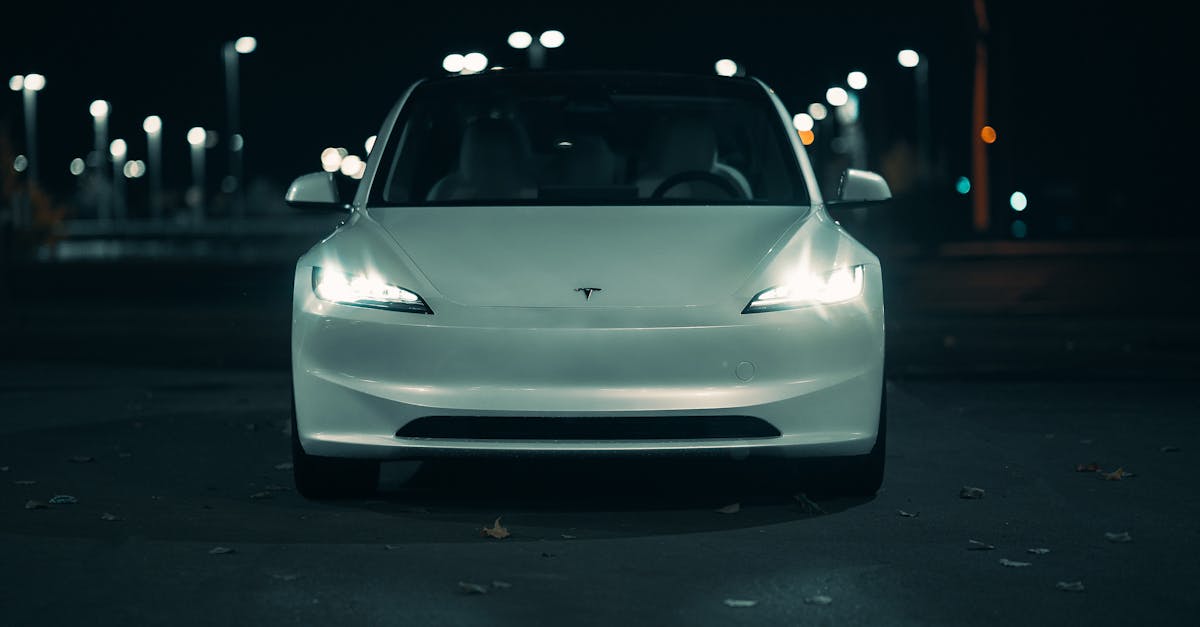
Instead of fixating on the material, ask yourself: What is the manufacturer promising about daily charging habits? What is thereal-worldrange? What’s the impact on cold weather performance? These questions directly address the outcome of the chemistry, which is what impacts your life. A well-engineered LFP pack in a Tesla Model 3 RWD will likely provide a more consistent and worry-free daily charging experience than an older, poorly managed NMC pack in another brand’s EV, despite NMC’s theoretical advantages.
Usable Range vs. Advertised Range: The Real Battery Metric
Advertised range figures are often the first thing people look at, and rightly so. However, battery chemistry doesn’t directly tell you this number. What it does influence, along with cell packaging and vehicle efficiency, is the usable range and how that range behaves in different conditions. The hidden cost of focusing only on chemistry is that it distracts from the comprehensive factors that define range.
In my experience, the biggest influence on usable range isn’t just the kWh capacity, but how effectively the battery pack is designed, cooled/heated, and managed by the car’s software. For instance, some manufacturers might use a more robust thermal management system that allows the battery to perform optimally in a wider range of temperatures, meaning less range loss in extreme heat or cold. Others might employ advanced software algorithms that more accurately predict remaining range, reducing ‘range anxiety’ even if the absolute number isn’t the highest.
Consider this: a vehicle with 70 kWh NMC battery and excellent thermal management might offer more consistent usable range in varied climates than an 80 kWh NMC battery in a different vehicle with sub-par thermal control. The chemistry is the same, but the engineering around it creates a vastly different driver experience. When evaluating an EV, always look for independent range tests (like those by the EPA or Edmunds) and reviews that discuss how the vehicle performs in various climates and driving styles. This tells you more than just the cathode material.
The Charging Speed Conundrum: It’s Not Just About C-Rates
Another area where battery chemistry specs often fail people is understanding charging speed. You might read about ‘C-rates’ or maximum charging kW, but these numbers alone are deceptive. The real-world charging experience – how quickly you can add significant range on a road trip – is governed by a complex interplay of battery chemistry, pack voltage, thermal management, and the vehicle’s charging curve.
What changed everything for me was observing actual charging curves. A battery might advertise a peak charging rate of 250 kW, but if it can only sustain that for 5-10 minutes before tapering dramatically, its practical advantage over a car that charges at 150 kW for a longer duration is minimal. Some chemistries handle sustained high power better, while others are designed for quick bursts. Again, the engineering and software play a massive role.
Modern EVs often prioritize battery health, which means managing heat during fast charging. A sophisticated thermal system can keep the battery within its optimal temperature window, allowing for higher sustained charging rates without degradation. Without this, even a theoretically superior chemistry might have its charging speeds artificially limited to protect the cells. So, instead of asking what chemistry it uses, ask what is the average charging speed from 10% to 80%? How flat is the charging curve? These questions cut through the noise and get to the heart of what matters when you’re waiting at a DC fast charger.
Longevity and Degradation: Beyond the Cell Chemistry
Battery degradation is a significant concern for many prospective EV buyers. Will the battery last? How much range will I lose over time? While chemistry does play a role (LFP, for example, is generally considered more robust to 100% charging cycles), it’s far from the only factor. Focusing solely on chemistry for longevity fails to account for crucial real-world protections put in place by manufacturers.
In my experience, the battery management system (BMS) and the vehicle’s thermal management are paramount to battery longevity. The BMS constantly monitors cell voltages, temperatures, and currents, ensuring the battery operates within safe parameters. It actively works to prevent overcharging, over-discharging, and excessive heat, all of which accelerate degradation. Sophisticated thermal systems cool batteries in hot weather and warm them in cold, preventing strain.
Furthermore, most EV manufacturers offer substantial battery warranties, often 8 years or 100,000-150,000 miles, guaranteeing a certain percentage of original capacity (typically 70%). This warranty is your ultimate protection, regardless of the underlying chemistry. Therefore, rather than delving into the nuances of specific chemical compositions, I strongly advise buyers to prioritize the manufacturer’s battery warranty and their track record for reliability – that’s the real trust signal.
The Future of Battery Chemistry: Diversity is Strength
The landscape of EV battery chemistry is constantly evolving, with new formulations and technologies emerging regularly. Solid-state, sodium-ion, and other exotic chemistries are on the horizon. My advice? Don’t view this diversity as a source of confusion or a reason to delay buying an EV. Instead, view it as a strength for the industry and ultimately for consumers.
What changed everything for me was understanding that different chemistries will be optimized for different use cases. High-performance sports cars might prioritize energy density and power output, while urban commuters might benefit from cheaper, more durable LFP batteries that can be charged to 100% daily. Commercial vehicles could lean towards chemistries that offer extremely long cycle life even if energy density is lower.
This specialization means that in the future, you’ll be able to choose an EV that is perfectly tailored to your needs, rather than a one-size-fits-all solution. As a consumer, your role isn’t to become a battery chemist. Your role is to understand your driving needs and then evaluate how a specific EV’s overall package (range, charging, cost, warranty) meets those needs. The underlying chemistry is just one ingredient in a much larger, incredibly complex, and continuously improving recipe.
Frequently Asked Questions
What’s the main difference between NMC and LFP batteries for an EV owner?
For an EV owner, the main difference often comes down to energy density and charging habits. NMC (Nickel Manganese Cobalt) batteries generally offer higher energy density, leading to more range for a given battery size, and often perform better in cold weather. LFP (Lithium Iron Phosphate) batteries are typically more robust, tolerate regular 100% charging better, are often less expensive, and are considered safer due to their thermal stability. However, their energy density is usually lower, meaning a larger, heavier pack for the same range, and they can see more significant range reduction in very cold temperatures.
Should I worry about my EV battery degrading because of its chemistry?
While battery chemistry influences degradation characteristics, modern Battery Management Systems (BMS) and sophisticated thermal management play a far more significant role in preserving battery health. All EV batteries degrade over time, but at a rate that is generally very slow and often covered by generous manufacturer warranties (typically 8 years/100,000-150,000 miles, guaranteeing around 70% capacity). Focus on the warranty and the manufacturer’s reputation for battery longevity rather than getting caught up in specific chemistry details.
Does battery chemistry affect how fast my EV charges?
Yes, battery chemistry can affect charging characteristics, but it’s not the only factor. While some chemistries might inherently handle higher power input better, the actual charging speed you experience is heavily influenced by the vehicle’s battery pack design, voltage architecture, thermal management system, and the car’s software-controlled charging curve. A well-engineered car with a theoretically less ‘fast-charging’ chemistry might outperform a poorly designed car with a theoretically superior one. Always look at real-world charging curves and times (e.g., 10% to 80% charge time) rather than just peak power figures.
Is one battery chemistry inherently safer than another?
All lithium-ion chemistries used in EVs undergo rigorous safety testing. LFP batteries are often cited for having greater thermal stability, making them less prone to ‘thermal runaway’ (fire) than some high-nickel NMC formulations. However, modern NMC and NCA battery packs incorporate extensive safety features, including advanced thermal management and robust containment, which make them very safe in real-world conditions. Ultimately, the overall pack design and safety engineering are more critical than the raw chemistry alone.
Will future battery chemistries make my current EV obsolete?
Unlikely in a meaningful way for most drivers. While new battery chemistries like solid-state or sodium-ion promise improvements in energy density, cost, or charging speed, they will likely be rolled out gradually and initially target specific market segments. Your current EV will continue to function perfectly well for its intended purpose. Think of it like internal combustion engine development: engines have gotten more efficient over decades, but older cars still get you from A to B. Focus on buying an EV that meets your current needs, knowing that the technology will continue to evolve.
The True North of EV Battery Decisions
Navigating the world of EV battery chemistry can feel like a daunting task, especially with the constant stream of new developments and technical specifications. My journey through countless EV reviews and ownership experiences has shown me that getting lost in the weeds of NMC versus LFP, or obsessing over specific electrode materials, is a misguided approach for most everyday drivers.
What truly works is shifting your focus from the intricate what of battery chemistry to the practical how it impacts your driving life. Instead of fixating on chemical acronyms, ask yourself: How does this EV perform in terms of usable range, charging speed, and long-term durability? How robust is the warranty? These are the questions that deliver actionable insights and lead to confident purchase decisions.
Ultimately, the brilliance of modern EVs lies not just in their battery cells, but in the sophisticated engineering that wraps around them: the thermal management, the battery management system, and the intelligent software that optimizes everything. Trust in these integrated systems and the manufacturer’s commitment to reliability, backed by a strong warranty. The diverse future of battery chemistry is exciting, but for today’s EV buyer, understanding its real-world implications, rather than its atomic structure, is your true north.
Sarah Jenkins
EV Reviews & Road Tests