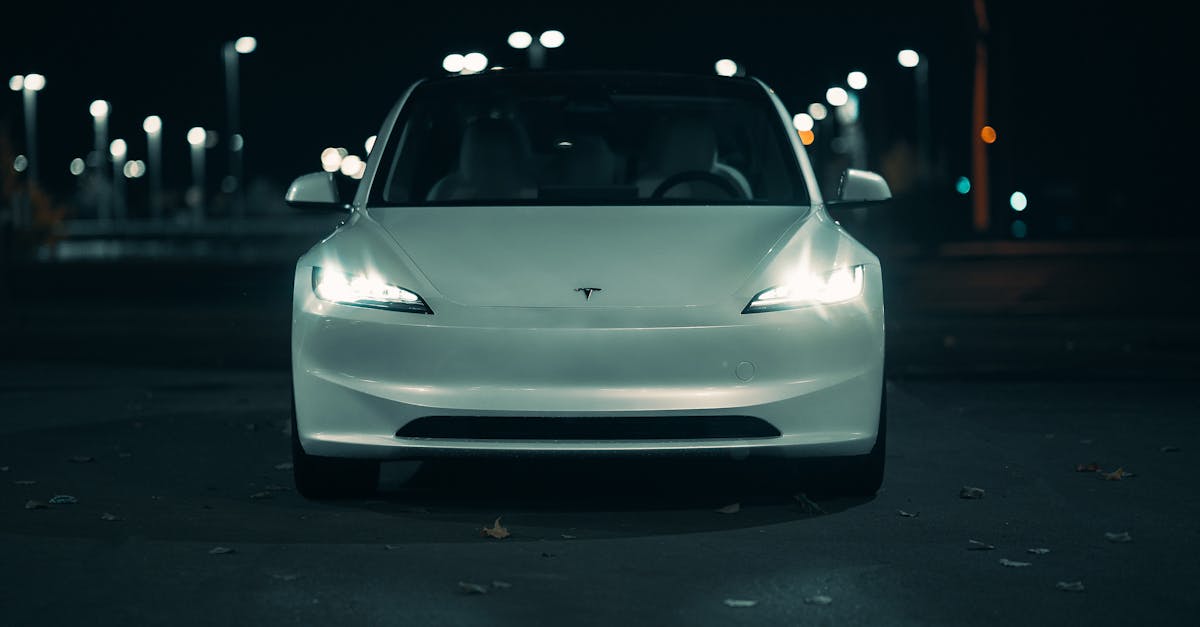
You’ve just taken delivery of your sleek new EV, excited about its cutting-edge technology. You’ve read the specs: LED matrix headlights, adaptive high-beams, maybe even fancy laser lights. You assume that because it’s an advanced electric vehicle, the headlights will be nothing short of revolutionary, illuminating the night like a stadium floodlight. Then, the first time you drive it on a truly dark, unlit road, reality hits. The beam pattern is uneven. The ‘adaptive’ features feel more like a gimmick than a game-changer. You’re constantly toggling between high and low beams, squinting to see road signs, and wondering why your supposedly high-tech headlights feel barely better than the halogens in your old gasoline car. You might even find yourself wishing for the simpler, more effective headlights of a decade ago.
This is a frustration I hear from EV owners time and again, and it’s a sentiment I share from my extensive road testing. Manufacturers are quick to tout the type of headlight technology, but they often fail to deliver on the fundamental promise: superior, consistent, and intuitive illumination. The problem isn’t always the technology itself; it’s how it’s implemented and, more importantly, how it’s regulated and marketed to consumers. The spec sheet tells one story, but the real-world performance, especially when you’re navigating unfamiliar backroads in less-than-ideal conditions, is often a stark disappointment. We’re being sold on buzzwords and potential, not practical, tangible benefits.
Key Takeaways
- High-tech EV headlight claims often mask inconsistent real-world performance due to implementation and regulation.
- Legal restrictions on adaptive matrix lights in the US significantly limit their potential compared to Europe.
- The most effective headlights prioritize a wide, even low-beam spread and genuinely powerful high-beams, not just fancy tech.
- Rely on independent, standardized tests like IIHS ratings, not manufacturer marketing, for true visibility comparisons.
- Strategic use of fog lights and aftermarket upgrades (where legal) can compensate for factory headlight shortcomings.
The Broken Promise of ‘Advanced’ Headlight Technology
When manufacturers talk about EV headlights, they throw around terms like LED, Matrix LED, Pixel LED, or even Laser Light. These sound impressive, hinting at superior vision. However, in my experience, the type of light source is far less critical than the design and engineering of the reflector or projector housing, and the associated control software. A poorly designed LED headlight can perform worse than a well-engineered halogen unit, even though the LED is intrinsically more efficient and offers greater design flexibility. The core problem is that many manufacturers prioritize aesthetics and the ‘wow’ factor of thin, futuristic light strips over actual functional illumination. They focus on how the lights look on the car, rather than how well they allow you to see the road.
For example, I’ve driven several premium EVs with supposedly advanced matrix LED systems that, on a dark highway, produce a surprisingly narrow and short low-beam pattern. This leaves the sides of the road and distant obstacles poorly lit, forcing you to strain your eyes and slow down more than necessary. The ‘adaptive’ features, which are supposed to shape the beam to avoid blinding oncoming traffic while keeping high beams on elsewhere, are often either too slow to react, too conservative in their beam shaping, or simply restricted by local regulations (a point I’ll expand on). The result is a headlight system that technically has a lot of potential but delivers mediocre performance, leaving drivers feeling underwhelmed and, frankly, less safe. It’s a classic case of over-promising and under-delivering, where the marketing budget for the technology outstrips the engineering investment in its practical application.
How Regulatory Roadblocks Cripple Cutting-Edge Features (Especially in the US)
One of the biggest culprits behind the perceived underperformance of advanced EV headlights, particularly in North America, is regulation. Many cutting-edge adaptive high-beam technologies, specifically adaptive driving beam (ADB) systems, have been standard in Europe and other markets for years, but were only recently approved for use in the United States. Even with the approval, the implementation and certification process has been slow and cautious, often leading to less sophisticated versions of the technology being deployed compared to their global counterparts.
In Europe, a true matrix LED system can continuously adjust individual LEDs or pixel arrays to create a dynamic ‘tunnel’ of darkness around oncoming vehicles or cars ahead, keeping the high beams on for maximum visibility everywhere else. It’s a truly transformative feature that significantly enhances night driving safety. In the US, however, the initial regulations for ADB were so stringent and prescriptive that many automakers opted to either disable the full functionality of their existing hardware or implement a heavily watered-down version. This means that an EV sold in Germany might have a dramatically more effective headlight system than the exact same model sold in California, simply due to differing legal interpretations and approval timelines. I’ve tested European models with these full-featured systems, and the difference is night and day – literally. Until regulations catch up fully and automakers are incentivized to enable the full capabilities of their hardware, US consumers will continue to miss out on the true potential of these ‘advanced’ headlight systems, no matter what the marketing brochure promises.
The Metrics That Actually Matter for Real-World Night Vision
Forget the number of LEDs or the laser light buzzwords for a moment. When it comes to real-world night vision, the metrics that genuinely matter are low-beam reach and spread, high-beam intensity and pattern, and the absence of glare for oncoming drivers. Unfortunately, these aren’t always easily quantifiable on a spec sheet, and they are often secondary considerations for designers obsessed with sleek light signatures.
In my testing, I look for a low-beam that provides a broad, even illumination across the road and shoulders, ideally reaching at least 200-250 feet ahead without significant hot spots or dark zones. Many modern EV headlights, in pursuit of a sharp, defined cut-off (often a regulatory requirement), sacrifice vertical illumination, making it hard to see overhead signs or sudden dips in the road. For high beams, it’s not just about raw brightness; it’s about a well-distributed pattern that extends far down the road and effectively lights up potential hazards without being overly narrow. I’ve found that some EVs with powerful high beams still have a pencil-thin pattern, making them less effective than a slightly less bright, but broader, beam. Crucially, a good headlight system also manages glare effectively, both for the driver and for other road users. This requires careful alignment and optics, something that can be compromised by stylistic choices or rushed production. Independent testing from organizations like the IIHS (Insurance Institute for Highway Safety) is far more indicative of real performance than any manufacturer claim, as they use standardized testing procedures to measure these critical metrics.
Why IIHS Headlight Ratings Are Your True North
Given the disconnect between manufacturer claims and real-world performance, how do you actually determine if an EV has good headlights before you buy it? My unequivocal recommendation: consult the IIHS (Insurance Institute for Highway Safety) headlight ratings. These are, in my opinion, the single most reliable source of objective information on headlight performance, far surpassing any marketing material or anecdotal forum discussions.
The IIHS uses a rigorous, standardized testing methodology that measures how far headlights illuminate straight roads, sharp curves, and gradual curves, for both high and low beams. They also assess glare for oncoming drivers. Each vehicle is rated Poor, Marginal, Acceptable, or Good. What makes the IIHS ratings so powerful is their consistency and objectivity. They cut through the marketing jargon and tell you, with hard numbers, how far down the road you can actually expect to see. I’ve often seen EVs with the fanciest ‘matrix’ or ‘laser’ lights receive a ‘Marginal’ or even ‘Poor’ rating, while a more modest LED setup on another vehicle might achieve a ‘Good’ rating because its fundamental light distribution is superior. Before you even consider a test drive, check the IIHS website. It will quickly tell you if a specific EV model genuinely delivers on visibility or if its advanced headlight technology is mostly for show. This single step can save you immense frustration and potentially enhance your safety on the road.
Practical Workarounds for Subpar EV Headlights
So, you’ve bought an EV, and its headlights are… not great. What now? You’re not entirely without options. While you can’t typically swap out an entire integrated headlight assembly for a different OEM one, there are some practical workarounds I’ve found useful, provided you respect local regulations and safety:
Strategic Use of Fog Lights: Many modern EVs come with LED fog lights. If your low beams are weak in spread or foreground illumination, engaging your fog lights (when appropriate and legal, i.e., in actual fog, heavy rain, or snow, or on unlit roads where they don’t blind others) can provide a crucial wide, low beam of light directly in front of and to the sides of your vehicle. This can fill in the gaps left by a narrow low beam, making it easier to see cyclists, pedestrians, or animals approaching from the side. Always ensure your fog lights are aimed correctly to avoid blinding oncoming traffic.
Aftermarket High-Performance Bulbs (if applicable): If your EV uses standard replaceable halogen or HID bulbs (less common in newer EVs, but still present in some models, especially older ones or those from less premium brands), you might consider upgrading to a higher-quality, road-legal LED conversion kit or more powerful HID bulbs. Crucially, ensure any aftermarket solution is DOT compliant and properly installed and aimed. A poorly installed or overly bright aftermarket bulb can create dangerous glare for others and may even be illegal. Research reputable brands and installers.
Auxiliary Driving Lights (for off-road or specific conditions): For those who frequently drive on unlit private roads, in rural areas, or off-road, installing a set of auxiliary driving lights or a light bar (which must be covered and not used on public roads in most jurisdictions) can provide immense supplemental illumination. This isn’t a solution for daily highway driving, but for specific use cases, it can dramatically improve visibility. Again, check local laws regarding installation and use.
Professional Headlight Aiming: Even factory headlights can sometimes be slightly misaligned. A professional service can check and adjust the aim of your headlights, ensuring they project light as intended and don’t inadvertently blind other drivers. This small adjustment can sometimes make a surprising difference in perceived illumination.
Frequently Asked Questions
Q: Are EV headlights generally better than gasoline car headlights because they’re newer technology?
A: Not necessarily. While many EVs utilize advanced LED or matrix technologies, the implementation and regulatory restrictions (especially in the US) can often lead to real-world performance that is only on par with, or even worse than, well-designed conventional headlights from gasoline cars. Always check independent ratings like those from IIHS, rather than relying on the type of technology.
Q: Why are adaptive matrix headlights in US EVs less effective than those in Europe?
A: The US only recently approved adaptive driving beam (ADB) technology. Initial regulations were very strict, leading automakers to either disable full functionality or implement watered-down versions compared to the more advanced, dynamic beam-shaping capabilities widely available in Europe for years. This limits how precisely and widely the high beams can be used without blinding other drivers.
Q: What should I look for in EV headlight performance when test driving?
A: During a test drive (ideally at night), pay attention to the low-beam spread (how wide and even the light is across the road and shoulders), the reach (how far down the road you can see clearly), and the high-beam intensity and pattern. Look for dark spots or areas where illumination drops off sharply. Test on various road types if possible. However, the most objective assessment will still come from IIHS ratings.
Q: Can aftermarket upgrades significantly improve EV headlights?
A: It depends on the EV model and its existing headlight setup. If your EV uses replaceable bulbs, high-quality, DOT-compliant LED conversion kits or more powerful HID bulbs can offer improvements. For sealed LED units, significant upgrades are generally not feasible or legal. Auxiliary driving lights are an option for off-road or specific conditions but are usually not street legal for continuous use. Always prioritize safety and legality.
Q: Does headlight technology impact battery range in an EV?
A: While LED headlights are significantly more energy-efficient than older halogen or HID systems, their power draw is generally minimal compared to the propulsion system or cabin heating/cooling. The impact on overall battery range is negligible for most driving scenarios. You won’t significantly extend your range by turning off your headlights, but choosing LEDs over older technologies does contribute to the overall efficiency benefits of an EV.
Conclusion
The promise of ‘advanced’ EV headlight technology often falls short of real-world expectations. While the underlying light sources like LEDs and lasers offer incredible potential, regulatory hurdles (especially in the US) and design choices that prioritize aesthetics over function frequently result in mediocre performance. My long-standing advice remains: don’t trust the marketing hype or the spec sheet alone. Prioritize objective, independent testing from organizations like the IIHS, and understand that features like adaptive matrix headlights may not deliver their full potential in your region. If you find yourself with an EV whose headlights leave you wanting more, a few strategic workarounds can help, but the key is to be an informed consumer and demand better from manufacturers. Your safety, and the safety of others on the road, depends on it.
Sarah Jenkins
EV Reviews & Road Tests