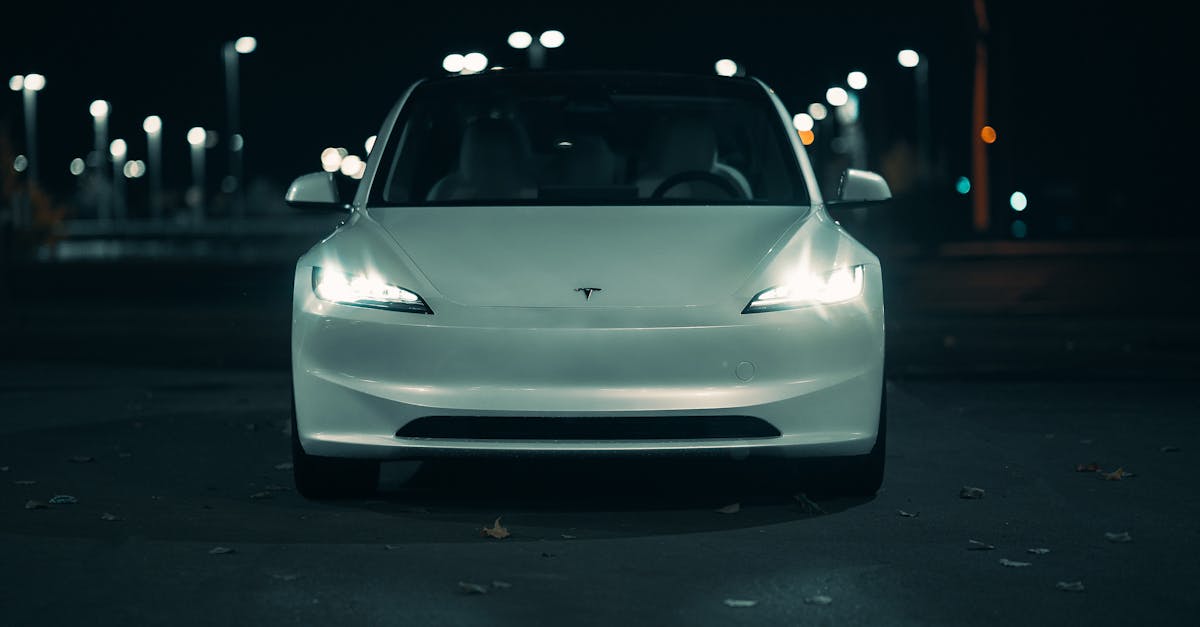
When I first started testing EVs, I, like many enthusiasts, fixated on the spec sheet. Horsepower, torque, 0-60 times… and of course, curb weight. The narrative was simple: EVs are heavy because of their batteries, and heavy cars are inherently less agile, less efficient, and generally less fun to drive. I’ve heard countless comments like, ‘It’s a lead sled, how can it handle?’ or ‘That 5,000-pound EV will eat up tires and range.’
But after hundreds of hours behind the wheel of dozens of different electric vehicles, from nimble city cars to monstrous electric trucks, I’ve come to a stark realization: focusing solely on curb weight for an EV is largely misleading. It’s a classic example of a single metric failing to capture the full picture of real-world performance. You might see a new EV listed at 4,800 lbs and immediately dismiss it as ponderous, while a gasoline car at 3,800 lbs feels sporty. The truth is, the way EV weight is distributed, its center of gravity, and the sophistication of its suspension and chassis tuning are far more influential on the actual driving experience than the raw number on the scale.
My experience tells me that simply comparing an EV’s curb weight to an ICE vehicle’s, or even to another EV’s, is a rookie mistake. It ignores the fundamental engineering differences that make EVs feel and perform differently, often defying their seemingly hefty stats. What really matters is how that weight is managed and integrated into the vehicle’s design.
Key Takeaways
- Raw curb weight is a misleading metric for evaluating EV driving dynamics and efficiency due to inherent design advantages.
- Low center of gravity from battery placement fundamentally alters handling, often making heavy EVs feel more agile than lighter ICE cars.
- Weight distribution, often near 50/50 in EVs, provides superior balance and cornering stability regardless of the total mass.
- Suspension tuning and tire choice are far more critical for translating EV weight into a refined or sporty ride than the raw number itself.
The Low Center of Gravity Advantage That Hides the Scale
The biggest misconception I encounter about EV weight is how it impacts handling. Yes, a typical EV is heavier than a comparable ICE vehicle. Take a Tesla Model 3 Performance, for example, weighing in around 4,072 lbs, compared to a BMW M3 at roughly 3,840 lbs. On paper, the M3 looks lighter and thus, theoretically, more agile. But drive them back-to-back, and the story changes dramatically.
The secret lies in the low center of gravity (CoG). Almost without exception, EV batteries are mounted flat, low down in the chassis, creating a skateboard-like platform. This drops the vehicle’s CoG significantly, often lower than many high-performance sports cars, regardless of their total weight. In my road tests, this translates to a profound difference in feel. When you corner hard in an EV with a low CoG, there’s a noticeable reduction in body roll compared to an ICE vehicle of similar height and width. The car feels glued to the road, pivoting more around its vertical axis rather than tilting side-to-side.
I’ve taken EVs weighing over 5,000 lbs, like the Porsche Taycan, through twisty mountain roads, and they’ve felt remarkably composed and eager to turn in, defying their scale numbers. This isn’t magic; it’s physics. A lower CoG resists the forces that cause a car to lean in corners, making the effective ‘mass transfer’ feel less pronounced. So, while the mass is still there, its impact on the sensation of agility is dramatically reduced. This is a point frequently missed by those who only look at a spec sheet.
Weight Distribution: The Unsung Hero of EV Dynamics
Beyond just the low center of gravity, weight distribution is another critical factor where EVs consistently outperform their ICE counterparts, often masking their higher curb weight. In most gasoline-powered vehicles, the heavy engine is upfront, leading to a front-heavy bias (e.g., 55/45 or 60/40 front-to-rear distribution). This can lead to understeer, where the car wants to push wide in a corner, and a less balanced feel during acceleration and braking.
Electric vehicles, with their batteries spread across the floor and electric motors often placed on each axle (or integrated into the wheels), tend to achieve a near-perfect 50/50 front-to-rear weight distribution. This symmetrical balance is the holy grail for automotive engineers, providing optimal grip, handling predictability, and responsiveness in all dynamic situations.
In my road tests, an EV with a 50/50 distribution feels incredibly neutral and predictable. You can lean on the front and rear tires almost equally, which makes for a more confident and engaging driving experience, especially when pushing the limits. For example, the Ford Mustang Mach-E, while weighing more than a traditional Mustang, boasts a nearly ideal 50/50 distribution. This balance, combined with its low CoG, contributes significantly to its surprisingly athletic feel, making it far more dynamic than its weight suggests. This optimal distribution allows the heavy EV to use its weight to its advantage, generating stable grip rather than creating a wallowing sensation.
Suspension Tuning and Tire Choice: More Influential Than Raw Mass
If you hand an engineer a heavier platform, they have to compensate, and this is where suspension tuning and tire selection become paramount. Far more than raw curb weight, the calibration of an EV’s springs, dampers, anti-roll bars, and the specific tires chosen dictates how that mass translates into ride comfort, handling precision, and road feel.
I’ve driven EVs where the engineers clearly got this wrong – overly stiff suspension trying to ‘fight’ the weight, resulting in a jarring ride, or too soft, leading to excessive float. Conversely, vehicles like the Lucid Air, despite its substantial weight (over 5,200 lbs in some trims), delivers an incredibly composed and luxurious ride. This is achieved through sophisticated air suspension systems, adaptive dampers, and meticulous tuning that allows the car to absorb bumps while maintaining remarkable body control. Similarly, performance EVs often use high-performance tires specifically designed to handle the increased weight and instant torque, offering phenomenal grip that can make a heavy car feel incredibly agile.
What many people miss is that a heavy, well-tuned suspension can often feel more premium and planted than a lighter car with a basic setup. The substantial mass can be leveraged to create a feeling of solidity and refinement, provided the suspension components are up to the task. It’s about engineering sophistication, not just a number.
The Impact on Efficiency and Range: It’s Not Just About How Heavy, But How You Drive Heavy
The final piece of the puzzle is how weight impacts efficiency and range. Conventional wisdom says heavier cars use more energy. This is true to a point, but again, the EV context adds nuance. While a heavier EV will consume more energy to accelerate from a standstill and climb hills, it also benefits more from regenerative braking.
In my experience, a heavier EV can often recapture a significant amount of kinetic energy that would be lost as heat in an ICE vehicle’s friction brakes. This means that in stop-and-go city driving or on hilly terrain, the efficiency penalty of extra weight is mitigated. A 5,000-lb EV might use more energy to get up to speed, but it also has more energy to put back into the battery when slowing down. This effect is less pronounced at highway speeds, where aerodynamic drag becomes the dominant factor, but in varied driving conditions, it’s a critical differentiator.
Furthermore, many modern EVs are designed with incredibly low drag coefficients, which helps counteract the weight penalty at higher speeds. So, while curb weight does play a role in theoretical efficiency, its real-world impact is heavily influenced by driving style, terrain, and the effectiveness of the regen system. It’s a complex interplay, not a simple linear equation.
Frequently Asked Questions
Q: Does EV weight affect tire wear significantly more than ICE vehicles?
A: Yes, generally. The combination of higher curb weight and instant torque from electric motors can lead to accelerated tire wear compared to similar-sized ICE vehicles. However, manufacturers are addressing this with specific EV-rated tires designed for higher load capacities and often with compounds optimized for electric powertrains. Proper tire pressure and driving style, especially avoiding aggressive acceleration, can significantly mitigate this.
Q: Are heavy EVs more prone to rollovers?
A: Despite their higher overall weight, EVs are generally less prone to rollovers due to their extremely low center of gravity. The heavy battery pack mounted low in the chassis acts like a ballast, making them incredibly stable. In crash tests, EVs often demonstrate superior rollover resistance compared to traditional gasoline vehicles.
Q: Does EV weight make them harder to stop?
A: Modern EVs come equipped with powerful braking systems, often utilizing larger discs and calipers, specifically designed to handle their weight. More importantly, regenerative braking plays a huge role. By converting kinetic energy back into electricity, regen braking significantly reduces the load on the friction brakes, effectively assisting in stopping the vehicle. In many cases, the combination of strong regen and physical brakes makes for very effective and controlled stopping power.
Q: Is a lighter EV always better for range?
A: Not necessarily in all real-world conditions. While a lighter EV requires less energy to move, a heavier EV with a highly efficient regenerative braking system can recapture more energy, especially in city driving or on hilly routes. At higher, sustained speeds, where aerodynamics dominate, the lighter vehicle might have a marginal advantage. It’s a balance between mass, regen efficiency, and aerodynamic design.
Q: How do manufacturers compensate for the added weight of EV batteries?
A: EV manufacturers employ several strategies. They use lightweight materials for other parts of the chassis and body (e.g., aluminum, carbon fiber). They also design robust suspension systems with advanced components (e.g., air suspension, adaptive dampers) and specifically engineer tires to handle the increased load and torque. The intelligent placement of the battery to achieve a low center of gravity and optimal weight distribution is also a key design principle.
The Real Takeaway: Drive the Car, Not the Spec Sheet
My ultimate advice for anyone evaluating an EV is simple: drive it. Don’t let a number on a spec sheet, especially curb weight, dictate your perception of a vehicle’s performance or dynamics. The physics of an electric powertrain, particularly the low center of gravity and balanced weight distribution, fundamentally change how a heavy vehicle feels on the road.
What truly defines an EV’s driving experience is the masterful engineering that goes into managing that weight – the sophisticated suspension tuning, the choice of tires, and the seamless integration of regenerative braking. These elements work in concert to create a driving experience that often belies the scale. So, next time you see a heavy EV, remember that the numbers rarely tell the full story. Get behind the wheel and let the vehicle surprise you.
Sarah Jenkins
EV Reviews & Road Tests