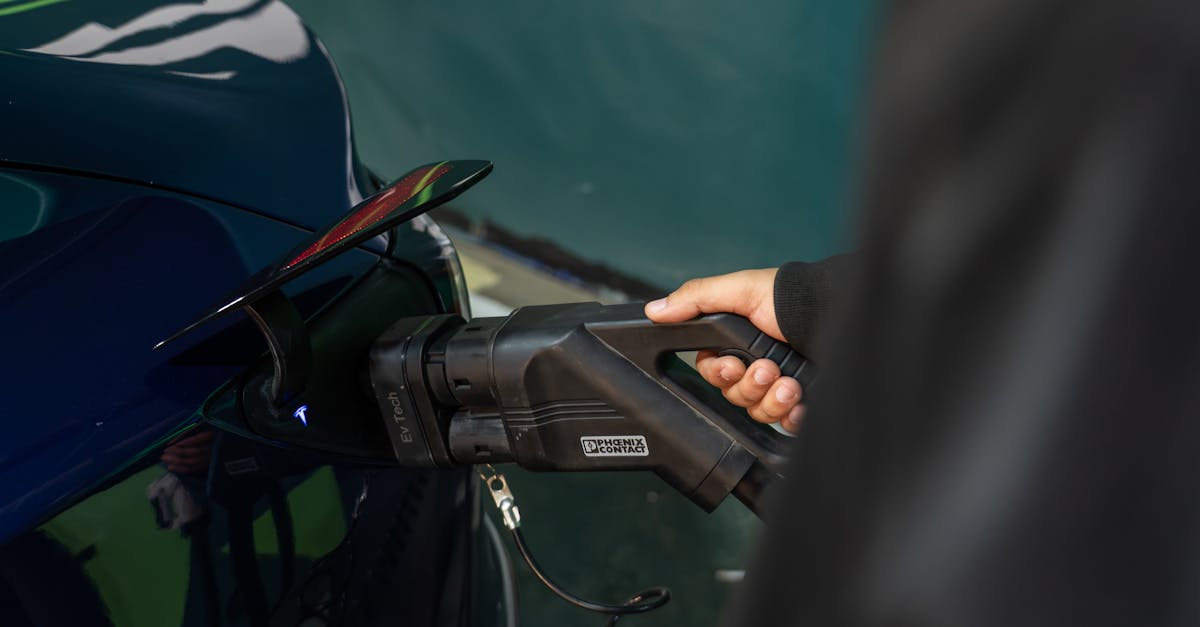
You’ve just bought your brand-new EV, eager to embrace a greener future and ditch the gas station. You see that impressive range figure advertised, maybe 300 miles, and you think, “Fantastic! Road trips here I come.” But then, reality hits. Your daily commute, which should easily be covered, leaves you with far less charge than anticipated. That weekend drive to visit family, well within the advertised range, suddenly looks daunting. The anxiety creeps in: range anxiety.
I’ve heard this story countless times from new EV owners, and I’ve experienced it myself. The sticker on the window, or the manufacturer’s website, gives you one number, but your actual driving experience tells a different story. The mistake I see most often is a fundamental misunderstanding of how EV range is calculated and, more importantly, how real-world variables aggressively chip away at that ideal figure. It’s not just about the battery size; it’s about everything else.
What changed everything for me was a deep dive into the practicalities of EV range, moving beyond the optimistic lab tests and into the messy, unpredictable reality of driving. It’s not about being misled; it’s about equipping yourself with the knowledge to anticipate and manage your range effectively, turning potential anxiety into confident driving.
Key Takeaways
- EPA estimates are a starting point, not a guarantee; real-world factors like speed, temperature, and terrain drastically reduce actual range.
- Highway driving above 60 mph is a major range killer for EVs, often reducing it by 20-30% compared to city driving.
- Cold weather significantly impacts battery efficiency and cabin heating, leading to a 20-40% range reduction in winter months.
- Aggressive driving habits (hard acceleration/braking) and using energy-intensive accessories (AC, heater) are silent range thieves.
- Focus on kWh/mile consumption and adjust driving style, pre-condition your battery, and strategically use charging to manage real-world range effectively.
The Deceptive Simplicity of EPA Estimates
When you see an EV’s range advertised, it typically comes from the Environmental Protection Agency (EPA) test cycle in the US, or WLTP (Worldwide Harmonized Light Vehicles Test Procedure) in Europe. These tests are standardized to allow for direct comparisons between vehicles, which is great for marketing and initial comparison shopping. However, they are fundamentally laboratory tests conducted under very specific, controlled conditions. They aim for reproducibility, not perfect real-world simulation.
The EPA test involves a mix of city and highway driving, with specific speeds, acceleration rates, and stops. It’s designed to represent an average driving scenario. In my experience, the moment you deviate from that average – which you inevitably do – your actual range diverges. For example, the EPA tests are conducted at ambient temperatures, typically around 70°F (21°C). They don’t account for extreme heat or cold, both of which are massive energy drains. They also don’t factor in sustained high-speed highway cruising, which is where EVs often struggle the most. Think of it like a fuel economy sticker on a gas car; you know intuitively that those numbers are achievable only under ideal conditions. For EVs, the deviation can feel even more dramatic because the consequence of miscalculation (running out of charge) is often more inconvenient than running out of gas.
What many people miss is that the EPA number is a baseline. It’s a theoretical maximum under specific, gentle conditions. Relying on it as a guaranteed figure for your unique driving style, local climate, and preferred routes is the first step towards frustration. Understanding its limitations is crucial for setting realistic expectations and planning effectively.
The Silent Killer: Highway Speeds Above 60 MPH
This is perhaps the single biggest shock for new EV drivers. While internal combustion engine (ICE) cars typically get their best fuel economy on the highway, EVs often perform worse at sustained high speeds compared to city driving. Why? Aerodynamics. As you increase speed, aerodynamic drag increases exponentially. For an EV, overcoming this drag requires a significant amount of energy, more so than the relatively efficient motor and regenerative braking can easily recover.
In my own road tests, I’ve consistently observed that an EV rated for 250 miles might deliver close to that in mixed city/suburban driving where speeds are lower and regenerative braking is frequent. However, take that same EV on an interstate at 75-80 mph, and the effective range can plummet by 20-30%, sometimes even more. A 250-mile EPA rating can quickly become a 175-200 mile reality at highway speeds. This is compounded if you’re driving uphill, facing a headwind, or running the AC or heater at full blast.
The critical insight here is to adjust your range expectations significantly for highway trips. If you’re planning a long journey, don’t just divide the total distance by your EPA range. Factor in a substantial reduction for sustained high-speed driving. This means more frequent charging stops or slower cruising speeds if you want to stretch your range.
The Winter Wonderland Woes: Temperature’s Tyranny
Cold weather is an EV’s kryptonite, and it’s a factor most new owners underestimate. Batteries are electrochemical devices, and their performance is highly sensitive to temperature. In cold conditions (below 40°F/4°C), a few things happen simultaneously:
- Reduced Battery Efficiency: The chemical reactions inside the battery slow down, meaning it can’t deliver or accept charge as efficiently. This directly translates to less available energy and slower charging speeds.
- Cabin Heating: Unlike an ICE car that generates waste heat for the cabin, an EV needs to actively create heat using an electric resistance heater or a heat pump. Both consume significant battery power, especially resistance heaters, which are essentially giant toasters. Maintaining a comfortable cabin temperature on a cold day can eat up 10-20% of your available range alone.
- Battery Heating: Many EVs also use energy to warm the battery to its optimal operating temperature, further drawing power before you even start moving.
My personal experience driving EVs through New England winters has shown me that a 20-40% reduction in range is common in sub-freezing temperatures. On a particularly frigid day, I’ve seen my 280-mile rated EV show an initial estimated range closer to 180 miles after an overnight outdoor charge. This isn’t a defect; it’s physics. Acknowledging this reality, rather than being surprised by it, is key to managing winter EV driving. Pre-conditioning your car while still plugged in is a game-changer, but even that can’t entirely negate the fundamental impact of cold on the battery itself.
The Aggressive Driver & Accessory Drain: Your Hidden Energy Sinks
Beyond external factors, you are a significant variable in your EV’s range. How you drive and what accessories you use have a profound impact. Aggressive driving, characterized by rapid acceleration and hard braking, is a major range killer.
While regenerative braking does recover some energy during deceleration, it’s never 100% efficient. Smooth, gradual acceleration and anticipating traffic to allow for gentle deceleration maximize energy efficiency. Every time you stomp on the accelerator, you’re demanding a lot of power, and that power comes directly from your battery.
Similarly, using energy-intensive accessories drains your range silently. The heater and air conditioning are the biggest culprits, but even heated seats, heated steering wheels, and defrosters contribute. Modern EVs with large screens and powerful infotainment systems also draw a continuous, albeit smaller, amount of power. It’s a cumulative effect.
I’ve found that consciously adopting a smoother driving style, often referred to as ‘hypermiling’ for ICE cars, makes a noticeable difference. Utilizing Eco modes, which often temper acceleration and reduce climate control intensity, can also extend your range. When it’s cold, prioritize heated seats and steering wheel over blasting the cabin heater, as they directly warm you with less energy consumption. These seemingly small changes add up to real-world range gains that can mitigate the impacts of other factors.
Focusing on Efficiency: Kilowatt-Hours Per Mile (kWh/mile) is Your True North
Instead of fixating solely on the advertised range, a more practical metric to monitor is your kilowatt-hour per mile (kWh/mile) consumption, often displayed as miles per kWh on your EV’s dashboard. This is your EV’s ‘MPG’ equivalent. It tells you how much energy your car is actually using to travel each mile.
Lower kWh/mile (or higher miles/kWh) means better efficiency and more range. A typical mid-size EV might average around 0.3 kWh/mile (or 3.3 miles/kWh) in mixed driving. On the highway at speed, this might jump to 0.4 kWh/mile (2.5 miles/kWh) or higher. In freezing weather, it could easily hit 0.5-0.6 kWh/mile (1.6-2 miles/kWh).
Monitoring this figure provides real-time feedback on how your driving style, accessories, and environmental conditions are affecting your range. It allows you to:
- Learn Your Car’s Habits: Understand what factors specifically impact your vehicle’s efficiency.
- Adjust on the Fly: See the immediate effect of easing off the accelerator, turning down the heat, or reducing speed.
- Plan More Accurately: Use your typical kWh/mile for a planned trip to get a more realistic range estimate than the EPA sticker.
Many EV apps also provide trip data including average kWh/mile, which is invaluable for post-trip analysis and learning. This is the metric that truly empowers you to understand and manage your EV’s range in the real world, shifting from a passive consumer of a misleading number to an active manager of your vehicle’s energy consumption.
The Smart Way to Plan Long Trips: Beyond the Range Number
Given all these variables, planning a long EV road trip can feel like a guessing game. The solution isn’t to simply memorize your car’s EPA range. It’s to embrace strategic planning with a dash of flexibility.
- Utilize EV Route Planners: Apps like A Better Routeplanner (ABRP), PlugShare, and your car’s native navigation system are designed to factor in elevation changes, temperature forecasts, vehicle efficiency data, and charging station availability. Input your specific EV model, battery size, and even your expected driving style, and these tools will give you a far more accurate picture of your journey, including recommended charging stops and estimated charge times.
- Factor in Buffers: Always plan to arrive at charging stations with a buffer, typically 10-20% charge remaining. Unexpected detours, a sudden headwind, or a slight miscalculation can quickly eat into your range. Don’t push your luck to 0%.
- Charge to 80% for Road Trips: While you might charge to 100% at home for daily use, for long road trips, charging past 80% at a DC fast charger significantly slows down the charging rate. It’s often more efficient to charge to 80% and make an extra, quicker stop than to sit and wait for the last 20% to trickle in.
- Embrace Destination Charging: Look for hotels or attractions with Level 2 chargers. Plugging in overnight can top you off for the next day’s journey without dedicated fast charging time.
My personal rule of thumb is this: Assume your effective range on the highway is 70-80% of the EPA rating, and adjust further for extreme cold or aggressive driving. Then, use a dedicated EV route planner to cross-reference your assumptions. This layered approach ensures you’re not caught off guard, and it transforms the stress of range anxiety into the satisfaction of a well-planned, smooth EV journey.
Frequently Asked Questions
Q: Why is my actual EV range so much lower than the advertised range?
A: Advertised EV ranges (like EPA or WLTP) are derived from standardized laboratory tests under ideal conditions. Real-world factors such as higher speeds (especially above 60 mph), cold or hot weather, aggressive driving, hilly terrain, and heavy use of heating/AC drastically increase energy consumption, leading to a significant reduction in actual range.
Q: Does driving faster reduce EV range more than in a gasoline car?
A: Yes, in many cases. While both EV and gasoline cars see reduced efficiency at higher speeds due to aerodynamic drag, EVs typically experience a more pronounced drop-off at sustained highway speeds. Regenerative braking benefits are also minimized on highways. This means a 75 mph cruise will drain your EV battery much faster than city driving, often reducing its range by 20-30% compared to its city performance.
Q: How much does cold weather actually affect EV range?
A: Cold weather can reduce EV range by 20-40% or even more, depending on the temperature and how much you use the cabin heater. Batteries are less efficient in the cold, and significant energy is consumed by heating the battery and the cabin. Pre-conditioning your car while it’s still plugged in can help mitigate some of this loss by warming the battery and cabin using grid power instead of battery power.
Q: What driving habits improve EV range?
A: Smooth and consistent driving is key. Avoid rapid acceleration and hard braking; instead, accelerate gently and use regenerative braking efficiently by anticipating stops and coasting. Maintaining moderate speeds, especially avoiding sustained high highway speeds, and using Eco modes can also significantly extend your range. Minimizing the use of energy-intensive accessories like the heater and AC, or using heated seats/steering wheel instead of the main cabin heater, also helps.
Q: Should I charge my EV to 100% for every trip?
A: For daily driving, most manufacturers recommend charging to 80-90% to prolong battery life. For long road trips, charging to 100% might be necessary, but be aware that the charging rate significantly slows down after 80% on DC fast chargers. It’s often more time-efficient to charge to 80% and make an additional shorter stop than to wait for the final 20% to trickle in. Using EV route planning apps can help you optimize your charging strategy for longer journeys.
Understanding the nuanced reality of EV range is about empowerment. It’s about moving past sticker shock and into smart driving. By acknowledging that advertised ranges are ideal-scenario estimates, and by understanding how factors like speed, temperature, and your own driving style impact efficiency, you can transform your EV experience. Stop chasing a mythical number and start focusing on kilowatt-hours per mile. This shift in perspective, combined with smart planning tools, will give you the confidence to truly enjoy the freedom and convenience that electric vehicles offer, making range anxiety a thing of the past.
Mark Harrison
Charging & Range Analysis