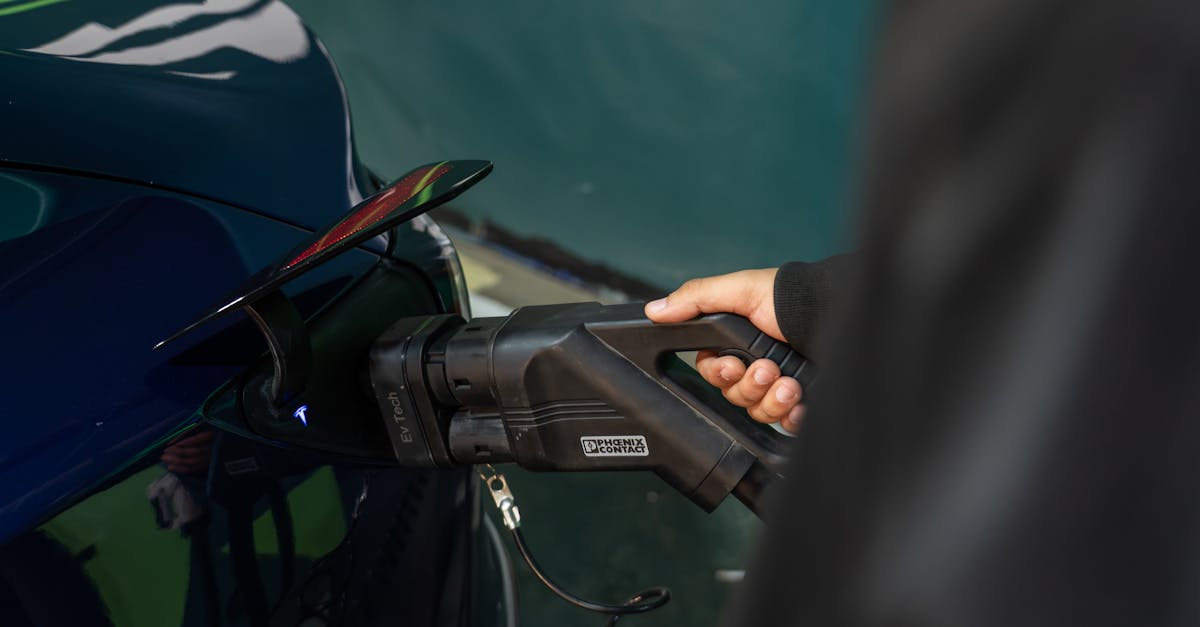
The promise of electric vehicles often conjures images of effortless, cheap charging – especially at public stations. You envision pulling up, plugging in, and driving away with a full battery, perhaps for less than a tank of gas. But in my experience, and the countless stories I’ve heard from fellow EV drivers, the reality of public EV charging fees often falls short, leading to frustration, unexpected costs, and a general sense of being nickel-and-dimed. It’s a system that, for most people, simply doesn’t work as advertised.
I’ve spent years navigating the evolving landscape of EV charging, from early adopter days with clunky apps and unreliable chargers to today’s slightly more streamlined but still perplexing systems. The mistake I see most often, and one I made myself early on, is assuming public charging fees are straightforward, transparent, or even consistently competitive with home charging. They are rarely any of those things. What changed everything for me was realizing that public charging isn’t a one-size-fits-all solution; it requires a strategic, almost investigative, approach to avoid unnecessary expenses.
Key Takeaways
- Public EV charging pricing models are inherently complex and often opaque, making cost prediction difficult.
- Per-minute charging, especially on slower chargers, can lead to disproportionately high costs due to charging curve limitations.
- Strategic EV drivers prioritize energy-based (per kWh) pricing and actively seek out networks offering such models.
- Leveraging charging network memberships, comparing real-time rates, and understanding your EV’s charging curve are crucial for cost savings.
Why Per-Minute Pricing Undermines Your Savings
The most insidious pricing model I encounter, and one that consistently fails drivers, is per-minute charging, particularly on Level 2 (AC) chargers, but sometimes even on DC Fast Chargers. On the surface, it seems fair: you pay for the time you’re plugged in. However, this completely disregards your EV’s charging curve and actual energy uptake.
Consider a scenario I faced with my own EV, a popular model with a decent but not groundbreaking 7 kW AC charging speed. I once plugged into a public Level 2 charger at a flat rate of $0.15 per minute. Sounds reasonable, right? I needed about 20 kWh to get home comfortably. On paper, at 7 kW, that should take less than 3 hours, costing around $27. However, my car’s charging curve, especially as the battery approaches 80% or if the station’s actual output was lower than advertised, meant I was only pulling an average of 5 kW for much of that session. Plus, some of that initial ‘charging’ time is handshake and ramp-up, not pure energy transfer.
The result? It took closer to 4 hours to get those 20 kWh. My actual cost shot up to $36 for 20 kWh, or a staggering $1.80 per kWh. Compare that to my home charging rate of $0.12 per kWh, and it’s 15 times more expensive. This isn’t an anomaly; it’s a fundamental flaw in per-minute pricing that punishes slower charging rates and the inherent inefficiency of the charging process itself. You’re paying for time, not energy.
It gets even worse with DC Fast Charging (DCFC). While per-minute rates on DCFC are often higher (e.g., $0.30-$0.50 per minute), the sheer speed means you’re often getting more energy for your dollar. However, once your battery hits 80% or so, the car significantly throttles charging speed to protect the battery. If you stay plugged in on a per-minute DCFC for those final, slow percentages, your effective cost per kWh can skyrocket. I’ve seen drivers pay upwards of $2-$3 per kWh for those last few slow percents – a colossal waste.
The Opacity of Network-Specific Pricing Tiers
Another major frustration is the sheer number of charging networks, each with its own pricing structure, membership tiers, and payment methods. What might be a reasonable rate on Electrify America could be exorbitant on EVgo, and vice versa. It’s not just different rates; it’s different types of rates: per kWh, per minute, flat session fees, or a hybrid. And then there are peak and off-peak times, idle fees, and subscription discounts.
In my experience, trying to juggle these mentally on the fly is a recipe for overspending. I once made the mistake of assuming a charger at a shopping center, run by a lesser-known network, would have similar rates to the major players. It was a per-minute rate, and I didn’t check the actual output. What I thought would be a quick top-off turned into a surprisingly expensive session because the station was older and only delivering about 3 kW – far below its advertised 6.6 kW. I was paying for 6.6 kW of potential time, but only getting half the energy. This kind of opacity is a common trap.
Moreover, the concept of ‘membership discounts’ can be misleading. While networks like Electrify America or EVgo offer monthly subscriptions that reduce per-kWh rates, you need to charge frequently enough on that specific network for the subscription fee to pay for itself. For many casual public chargers, the added monthly fee negates any per-kWh savings, effectively increasing your overall cost.
Hidden Idle Fees: The Penalty for Being Polite
Idle fees are another way public charging systems extract extra money from unsuspecting drivers. These are charges incurred when your car remains plugged into a charger after its charging session is complete, or once it reaches a certain state of charge (e.g., 100%). On the surface, idle fees are designed to encourage drivers to move their vehicles, freeing up chargers for others, which is a commendable goal for charger availability.
However, in practice, they can be a significant financial hit, especially if you’re not constantly monitoring your charging status. I’ve heard horror stories of drivers leaving their car to charge overnight on a DC Fast Charger (a bad idea for battery health and cost, to begin with) and waking up to hundreds of dollars in idle fees, far exceeding the cost of the actual energy. Even on Level 2 chargers, idle fees, typically around $0.40 per minute, can quickly accumulate.
My personal close call came during a road trip. I plugged into a DCFC at a remote rest stop and went inside for a meal. My phone notification for ‘charging complete’ was delayed due to poor signal. By the time I got back to my car, I had accumulated nearly an hour of idle fees on top of my charging cost. It was a stark reminder that even with good intentions, these fees are unforgiving and can easily derail your budget.
The Strategic Approach That Actually Works
To navigate the complex world of public EV charging fees and actually save money, I’ve developed a strategic approach that prioritizes understanding over assumption.
1. Prioritize Per-kWh Pricing Whenever Possible
This is my golden rule. When searching for public chargers, I always prioritize stations that charge by the kilowatt-hour (kWh). This is the fairest and most transparent model because you are paying for the actual energy you receive, regardless of your car’s charging speed or the station’s fluctuating output. Most states now allow per-kWh billing, though some still have regulations favoring per-minute.
To find these, I use apps like PlugShare or the native apps of major charging networks (Electrify America, ChargePoint, EVgo, etc.) and filter for stations that list per-kWh rates. If a station only offers per-minute, I’ll calculate the effective cost per kWh based on the advertised charging speed (e.g., $0.15/minute on a 6 kW charger is $0.15 / (6 kW / 60 minutes) = $1.50/kWh – a clear no-go for me).
2. Know Your Car’s Charging Curve and Maximize Effective Speed
Understanding how your specific EV charges is paramount. For DCFC, know the sweet spot (usually 10% to 70-80% state of charge) where your car pulls maximum power. Outside this window, especially above 80%, the charging speed drops significantly, making per-minute charging exceptionally expensive. I rarely charge past 80% on a DCFC unless absolutely necessary, and never on a per-minute DCFC after that point.
For Level 2 charging, be aware of your car’s maximum AC charging rate (e.g., 7 kW, 11 kW). Always check the station’s actual output. If you’re paying for a 6.6 kW Level 2 charger but it’s only delivering 3 kW, you’re getting a bad deal. Some apps or the car’s dashboard will show the actual charging rate.
3. Leverage Network Memberships (Wisely) and Third-Party Apps
While I advised caution on memberships, they can be valuable for frequent users of a specific network. For example, the Electrify America Pass+ plan significantly reduces per-kWh rates, making it worthwhile if you often use their DCFC network for road trips. Calculate your break-even point: if you spend more on charging than the monthly fee, plus the savings, it’s a net gain.
Furthermore, always cross-reference rates with third-party apps like PlugShare. These apps often show real-time rates, user comments on actual speed, and alert you to potential issues like broken chargers or excessive idle fees. They also help identify free charging options, which, while dwindling, still exist in some locations.
4. Set Charging Alerts and Avoid Idle Fees at All Costs
Most EV apps (Tesla, FordPass, myHyundai, etc.) allow you to set notifications for when your car reaches a certain state of charge or completes charging. Use these religiously. I set alerts for 80% (for DCFC) and 100% (for L2) to ensure I’m back at my vehicle before idle fees kick in. If I’m unable to move it immediately, I factor the potential idle fees into my decision.
This proactive approach saves me money and, just as importantly, ensures that the charger is freed up for the next driver. It’s a win-win for both your wallet and the EV community.
5. Prioritize Home Charging as Your Primary Fueling Method
Ultimately, public charging should be viewed as a supplemental or road-trip solution, not your primary fueling method. The unparalleled convenience and cost-effectiveness of home charging (especially overnight when electricity rates are lowest) cannot be overstated. If you can install a Level 2 charger at home, the investment will pay for itself many times over by reducing your reliance on expensive and unpredictable public rates.
My experience is that public charging, while essential, requires a sharp eye and a strategic mindset. Don’t let confusing fee structures or hidden charges drain your wallet. With a bit of planning and knowledge, you can navigate the public charging maze effectively and ensure your EV ownership remains as economical as it should be.
Frequently Asked Questions
Q: Why are public EV charging fees so complicated?
A: Public EV charging fees are complex due to varying business models of different charging networks, state regulations on energy reselling (some states don’t allow per-kWh billing), the type of charger (Level 2 vs. DC Fast Charger), and additional charges like idle fees or session fees. This creates a fragmented and often opaque pricing landscape.
Q: Is per-minute charging always more expensive than per-kWh?
A: Not always, but usually for most practical scenarios, especially on Level 2 (AC) chargers. Per-minute charging can become disproportionately expensive if your EV charges slowly, if the station’s actual power output is lower than advertised, or if your car significantly throttles charging speed (e.g., above 80% on DCFC). Per-kWh billing ensures you only pay for the energy you receive.
Q: How can I find the cheapest public charging options near me?
A: The best way is to use dedicated EV charging apps like PlugShare, ChargePoint, Electrify America, or EVgo. These apps allow you to filter by connector type, charging speed, and often display real-time pricing. Look for stations with per-kWh pricing, or check for free Level 2 chargers which are still available at some workplaces, hotels, or retail centers.
Q: What are idle fees and how can I avoid them?
A: Idle fees are charges incurred when your EV remains plugged into a public charger after it has finished charging or reached a certain state of charge (e.g., 100%). They are designed to encourage drivers to move their vehicles, freeing up the spot for others. To avoid them, use your EV’s native app or charging network app to set charging complete notifications, and return to move your vehicle promptly once charging is done.
Q: Is it worth paying for a charging network membership?
A: It depends on your charging habits. Memberships (like Electrify America Pass+) typically offer reduced per-kWh rates. Calculate your break-even point: if your monthly savings from the discounted rates consistently exceed the monthly membership fee, then it’s worthwhile. For infrequent public chargers, the membership fee might negate any savings, making it less economical.
In conclusion, while public EV charging fees can often be frustrating and surprisingly expensive, they don’t have to be. By understanding the pitfalls of different pricing models, knowing your car’s charging characteristics, and employing a few strategic habits, you can significantly reduce your costs and make public charging a more predictable and less painful part of your EV ownership experience. Don’t just plug in and hope for the best; plug in with a plan.
Mark Harrison
Charging & Range Analysis