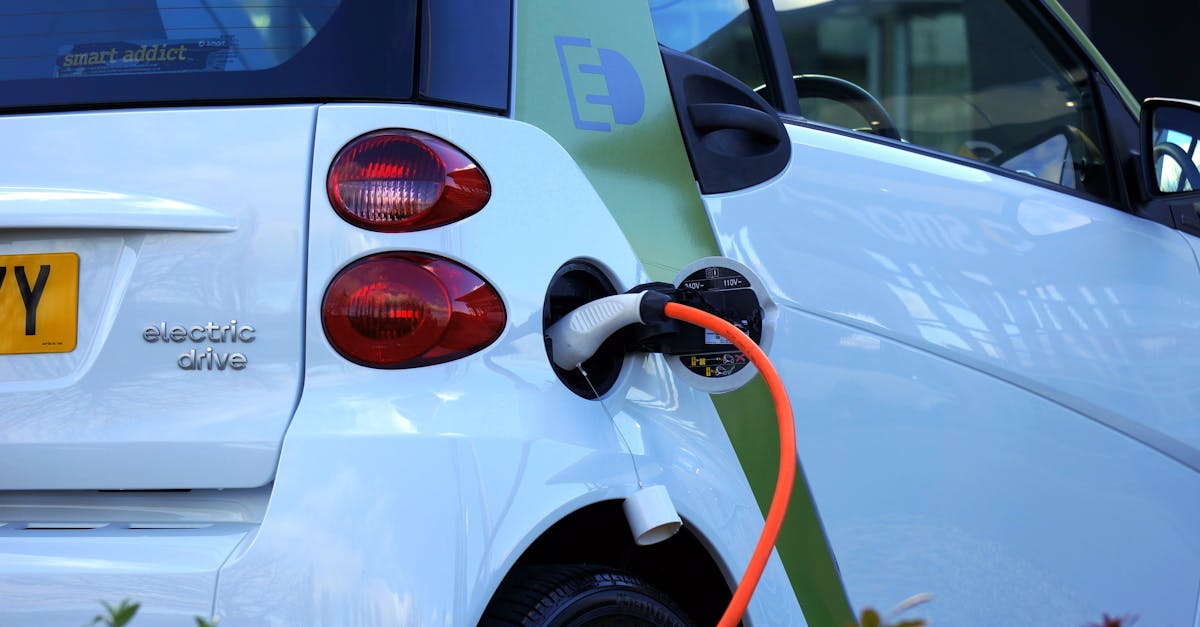
Most EV owners, when they first dive into the world of electric vehicles, get caught up in the manufacturer’s headline charging speed numbers. We see figures like ‘200 kW peak charging’ or ‘0-80% in 20 minutes’ and assume that’s what we’ll experience every single day. The reality, in my experience, is far different. These peak claims are optimized for marketing brochures and very specific, often ideal, conditions that rarely align with how most people use their EVs for daily commuting and errands. It’s a fundamental misunderstanding that leads to frustration and missed expectations, because what truly impacts your daily EV experience isn’t the theoretical maximum, but the average usable power you get over the most common charging scenarios.
The mistake I see most often is focusing solely on the highest advertised DC fast charging (DCFC) rate when that’s only relevant for long road trips. For 90% of your driving, you’re relying on Level 2 (240V AC) home charging or opportunistic public Level 2. Even when you do use DCFC, battery state of charge, temperature, and charger availability play far bigger roles than the theoretical peak. This article will break down why those advertised numbers often fail to translate to your actual daily routine and what metrics you should really be paying attention to.
Key Takeaways
- Peak DC fast charging rates are irrelevant for most daily driving scenarios, which rely on Level 2 AC charging.
- The usable Level 2 charging rate, influenced by your EV’s onboard charger, determines daily replenishment speed.
- Battery preconditioning is crucial for maximizing DC fast charging speeds, but many EVs lack it or users don’t activate it.
- Real-world charging is a dynamic process affected by battery temperature, state of charge, and charger capabilities, not just peak power.
The Misconception of ‘Peak Power’ for Daily Driving
Let’s be blunt: that glorious ‘250 kW’ sticker on a DC fast charger or in an EV spec sheet means almost nothing for your daily commute. In my years of driving various EVs and analyzing charging data, the vast majority of charging sessions for most drivers happen at home, overnight, on a Level 2 (240V AC) charger. This is typically between 7 kW and 11 kW, depending on your EV’s onboard charger capacity and your home electrical setup. When you wake up, your battery is full, regardless of whether your car could theoretically pull 200 kW.
The peak power figure is designed to alleviate ‘range anxiety’ on long road trips. It tells you the maximum power your vehicle might accept under ideal conditions (low state of charge, warm battery, high-power charger). But how often are you truly starting a road trip with a near-empty, perfectly preconditioned battery at a brand-new, top-tier 350 kW charger? Almost never. For daily driving, you’re topping off 30-50 miles of range at a time, which Level 2 handles with ease. Focusing on peak DCFC for daily use is like buying a Ferrari for grocery runs – overkill and irrelevant to the actual task at hand.
What matters for daily driving is your onboard charger’s maximum AC acceptance rate. Most EVs come with a 7.2 kW, 9.6 kW, or 11.5 kW onboard charger. This is the bottleneck for home and public Level 2 charging. If your car only accepts 7.2 kW AC, having an 11.5 kW capable home charger won’t make it charge faster. Conversely, if your car can do 11.5 kW, but you’re stuck with a 7.2 kW public charger, you’re limited by the charger. Understand your car’s AC limit and seek out charging infrastructure that matches it, and you’ll be far happier than fixating on DCFC claims.
The Onboard Charger: Your Daily Charging Bottleneck
Many new EV buyers overlook the onboard charger (OBC) specification, focusing instead on the impressive DC fast charging numbers. Yet, the OBC dictates your everyday charging experience at home and most public AC chargers. Think of it as the gatekeeper for all alternating current (AC) power entering your battery. If your EV has a 7.2 kW onboard charger, that’s the absolute maximum AC power it can accept, even if you plug it into a 48-amp (11.5 kW) Level 2 home charger. Your car simply can’t process more.
In my experience, a 9.6 kW or 11.5 kW OBC is the sweet spot for most households. A 9.6 kW OBC (requiring a 48A circuit) typically adds around 35-40 miles of range per hour, meaning an overnight charge can easily replenish 200-300 miles. An 11.5 kW OBC (requiring a 60A circuit) pushes that to 40-50 miles per hour, making even shorter top-ups highly effective. If you have an EV with a 7.2 kW OBC, you’re looking at closer to 25-30 miles per hour, which is perfectly fine for overnight, but might feel a bit slow for a quick public AC top-up.
When evaluating an EV, look beyond the flashy DCFC numbers and specifically check the AC charging rate. This figure directly translates to how quickly your car will gain range in the most common charging scenarios. A car with an 11.5 kW OBC and a slower DCFC might be more practical for daily life than a car with a 7.2 kW OBC and blazing fast but rarely used DCFC.
Battery Temperature’s Unseen Influence on Fast Charging
This is perhaps the biggest hidden cost of relying on peak charging claims: battery temperature. Manufacturers quote their best-case scenarios, often at an optimal battery temperature of around 70-80°F (21-27°C). The problem is, your battery is rarely at this ideal temperature, especially if you’re not on a road trip or haven’t activated preconditioning.
If you pull into a DC fast charger with a cold battery (common in winter, or even mild weather if you haven’t been driving long), your charging speed will be significantly throttled, sometimes by as much as 50% or more. The battery management system (BMS) intelligently protects the battery from damage. Attempting to force high power into a cold battery can cause lithium plating, which permanently degrades the battery. Similarly, a very hot battery (after aggressive driving or multiple fast charging sessions) can also see reduced speeds for protection.
What changed everything for me was understanding battery preconditioning. Some EVs (Tesla, Porsche, Hyundai/Kia E-GMP models) automatically precondition the battery when you navigate to a DC fast charger. This warms the battery to the optimal temperature before you arrive, allowing it to accept peak power much sooner and for longer. If an EV doesn’t have this feature, or if you don’t use the car’s navigation to activate it, you’ll almost certainly experience slower charging than advertised. Always factor in your climate and your car’s thermal management system when assessing real-world DCFC speeds.
The Dynamic Charging Curve: Not a Flat Line
When manufacturers say ‘0-80% in 20 minutes,’ they’re not telling you the full story. Charging is not a linear process. Every EV battery has a charging curve – a dynamic graph of how much power it will accept at different states of charge (SoC).
Typically, EVs accept their highest power rates when the battery is nearly empty (e.g., 10-20% SoC). As the battery fills, the charging rate gradually decreases, often significantly after 50-60% SoC, and then steeply drops off after 80%. This is another battery protection mechanism to prevent damage and ensure longevity. So, while your EV might pull 200 kW at 10% SoC, it might only pull 100 kW at 50% SoC, and a mere 30 kW at 85% SoC.
This is why charging to 80% is often recommended for efficiency on road trips. The final 20% (80-100%) takes disproportionately longer and delivers diminishing returns in terms of miles per minute. The advertised ‘20 minutes to 80%’ is based on this curve’s efficiency in the lower ranges. The hidden cost is that if you habitually charge past 80% on DCFC, you’re spending a lot more time than those initial numbers suggest. When planning your actual road trip stops, I’ve learned to always factor in that drop-off – aiming for frequent, shorter stops from low SoC to around 60-70% is often faster than fewer, longer stops to 90% or beyond.
Charger Reliability and Shared Power: The Unspoken Variables
Even if your car and battery are perfectly optimized, the real world often intervenes. Public charging infrastructure has its own set of challenges that impact your actual charging speed.
First, charger reliability. A broken charger, or one delivering significantly less power than advertised, is a common frustration. A 150 kW charger that’s only actually delivering 70 kW due to maintenance issues or partial failures immediately cuts your expected speed in half. My experience has taught me to always check app reviews and recent usage before driving to a specific charger.
Second, shared power. Many charging stations, especially older ones or those with multiple stalls, share power from a single power cabinet. If you pull up to a 150 kW station with two stalls, and another EV is already charging there, you might only get 75 kW each. While newer, higher-power stations (like some 350 kW Electrify America locations) often have dedicated power cabinets per stall, it’s not a given. Always observe the station layout and check if others are charging before expecting peak rates.
These real-world variables mean that even a technically capable EV might not hit its peak numbers consistently. It’s a reminder that the charging experience is a complex interplay of vehicle, battery, and infrastructure, not just a single advertised number. Understanding these external factors empowers you to make more informed choices and manage your expectations.
Frequently Asked Questions
Q: Why do EV manufacturers advertise peak charging speeds if they’re rarely achieved?
A: Manufacturers advertise peak charging speeds primarily for marketing and competitive positioning. These high numbers look impressive on spec sheets and help alleviate range anxiety for potential buyers, suggesting quick road trip turnarounds. However, they represent ideal conditions that are hard to consistently replicate in real-world driving duething to factors like battery temperature, state of charge, and charger limitations.
Q: What is battery preconditioning and how does it affect charging speed?
A: Battery preconditioning is a process where the EV’s battery management system actively heats or cools the battery to an optimal temperature range for fast charging. This is crucial because cold batteries accept power much slower to prevent damage. When activated (often by navigating to a DC fast charger), preconditioning ensures the battery is at the ideal temperature upon arrival, allowing it to accept higher power rates faster and sustain them longer, significantly reducing charge times.
Q: Should I always charge to 100% on a DC fast charger?
A: Generally, no. Most EVs exhibit a significant slowdown in charging speed once the battery reaches around 80% state of charge. The final 20% can take as long as the first 60-70%. For efficiency on road trips, it’s often faster to make more frequent, shorter stops, charging from a low SoC (e.g., 10-20%) up to 60-70%, rather than spending extra time pushing to 100%.
Q: How can I find out my EV’s actual usable Level 2 charging rate?
A: You can find your EV’s maximum Level 2 (AC) charging rate in its owner’s manual or on the manufacturer’s official specifications. This rate is determined by the vehicle’s onboard charger capacity, typically measured in kW (e.g., 7.2 kW, 9.6 kW, 11.5 kW). This number, not the DC fast charging peak, is what dictates your daily charging speed at home and most public AC stations.
Q: Does cold weather permanently damage my EV battery if I fast charge?
A: While charging a very cold battery at high speeds can cause temporary or even permanent degradation (lithium plating), your EV’s sophisticated Battery Management System (BMS) actively prevents this by automatically throttling charging speeds. It prioritizes battery health over speed, so while your charging will be slower, the risk of permanent damage from normal use is minimal because the car protects itself. Preconditioning helps mitigate this slowdown.
The Real Takeaway for EV Drivers
My ultimate takeaway after thousands of miles in EVs is this: don’t get fixated on theoretical peak numbers; focus on your actual daily needs. For most drivers, 80-90% of your charging will be Level 2 at home. Invest in a robust home charging setup that matches your EV’s onboard charger capabilities. For the occasional road trip, understand that battery preconditioning and the dynamic charging curve are far more influential on your actual charge times than the headline figure. Approach public fast charging with realistic expectations, acknowledging variables like temperature, shared power, and charger reliability.
By shifting your perspective from marketing hype to practical reality, you’ll find your EV charging experience to be smooth, efficient, and far less frustrating. Understanding these nuances isn’t just about avoiding disappointment; it’s about mastering your EV and truly integrating it into your lifestyle. Drive smarter, not just faster.
Mark Harrison
Charging & Range Analysis


