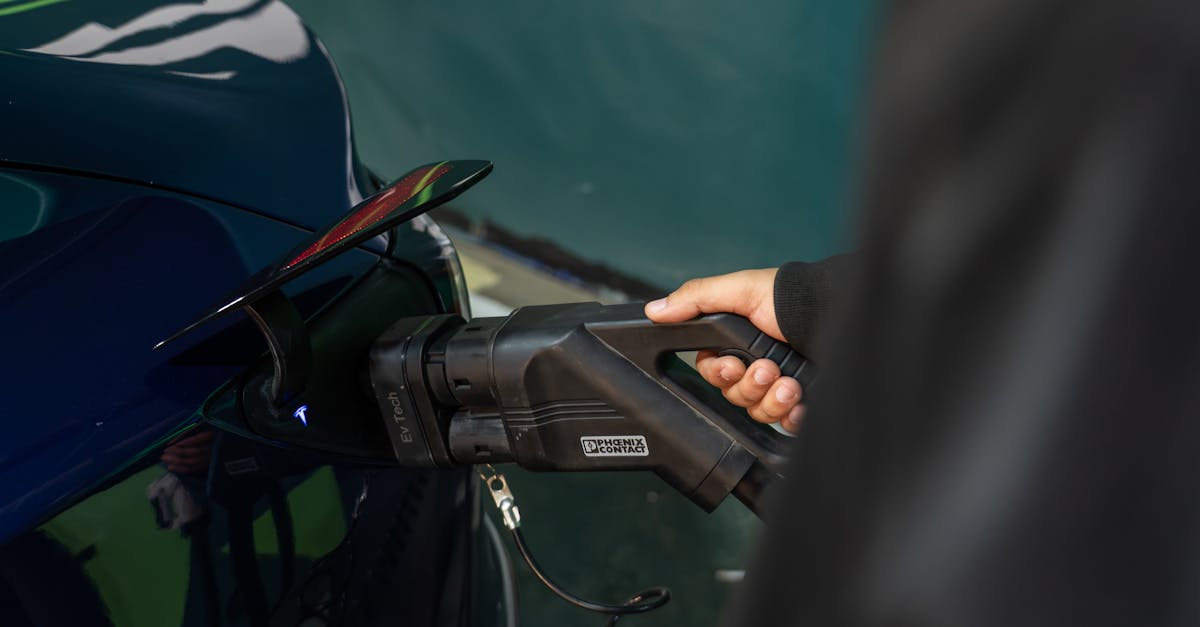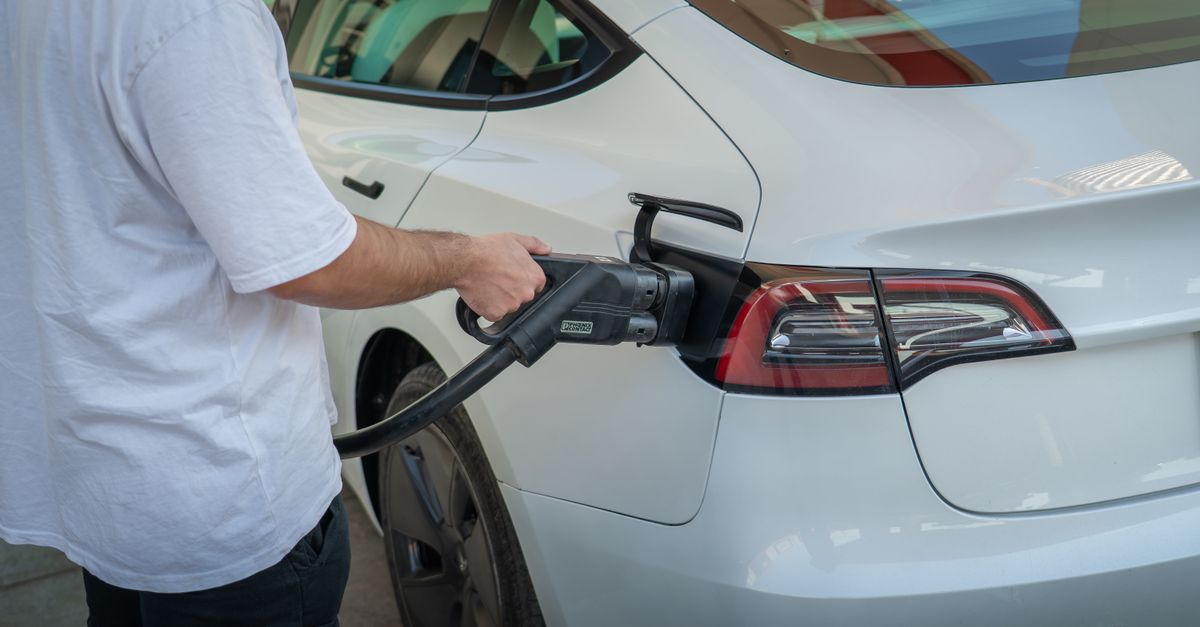
When I first bought my EV, I meticulously researched range, charging speed, and battery tech. What I completely overlooked, and what quickly became a daily frustration, was the charging port placement. It sounds trivial, doesn’t it? Just plug it in. But in the real world of crowded charging stations, tight garages, and varied charger designs, a poorly placed port can turn a quick top-up into an irritating exercise in cable management and parking lot acrobatics.
I vividly remember my first road trip with a brand-new EV. I pulled into a busy Electrify America station, eager for a fast charge. My car’s port was on the driver’s side front fender. The only available charger had a short cable that barely reached, forcing me to park diagonally and block the adjacent spot, earning me dirty looks. Later, at home, backing into my garage to reach the wall charger meant a multi-point turn every evening, all because the port was on the wrong side for a simple forward park.
This isn’t just a minor inconvenience; it’s a design oversight that affects everything from your daily charging routine to your long-distance travel sanity. Automakers often make these decisions based on manufacturing simplicity or legacy internal combustion engine (ICE) design, rather than actual user experience. But for EV owners, especially new ones, this detail can significantly impact the overall ownership experience. Let’s dig into why this matters so much and what solutions actually work.
Key Takeaways
- Centralized or front-mounted charging ports offer the most universal compatibility with diverse charging station layouts and home setups.
- Rear-mounted ports, particularly on the driver’s side, are the least convenient due to cable reach issues and common parking practices.
- Always consider your primary charging location (home garage, street parking, public stations) when evaluating port placement.
- Automakers should standardize on front-center or nose-mounted ports to maximize user convenience and reduce charging frustration.
The Fundamental Flaw: Assuming Universal Charger Design
The biggest mistake automakers make with charging port placement is designing for a hypothetical, perfectly uniform charging infrastructure that doesn’t exist. They assume all public chargers will have long, flexible cables, or that every home setup allows for ideal parking. In reality, public charging stations vary wildly: some have short, stiff cables; others have cable management systems that restrict movement. Home chargers, whether wall-mounted or pedestal, often have fixed locations.
Consider the typical gas station. The fuel cap is almost always on the rear or side, but the pump hoses are long enough to reach from almost any angle. EV charging cables, especially DC fast charging (DCFC) cables, are thicker, heavier, and often shorter due to engineering constraints (like resistance and heat dissipation). This means every inch of cable length, and every degree of flexibility, is precious. When a car’s port is at the rear-passenger side and the charger is on the driver’s side, you’re immediately fighting physics and geometry. My previous sedan had a rear-driver’s side port, and I swear I spent more time trying to stretch cables than actually charging. It became such a pain that I started actively avoiding certain charger brands with known short cables.
Automakers should recognize that infrastructure dictates convenience, not the other way around. A universal design strategy for port placement would prioritize maximum accessibility across all existing and future charger types and locations. This isn’t about blaming the charger companies; it’s about car designers acknowledging the messy reality of the real world.
The Unseen Daily Grind: Home Charging Headaches
While public charging frustrations are often highlighted, the daily annoyance of home charging is equally, if not more, impactful. Most EV owners charge primarily at home. For me, that meant a wall-mounted Level 2 charger in my garage. With my EV’s rear-driver’s side port, I had two options:
- Back in: This was the most direct route for cable access. But my garage is a tight fit, and backing a long sedan into a specific spot, especially after a long day, was a chore. It required careful maneuvering to avoid scraping the side mirrors or hitting storage shelves. Plus, I lost easy access to my trunk and rear seats.
- Park forward and stretch: This often meant the cable draped over the entire length of the car, risking scratches if not carefully managed, and placing strain on the cable connector. It also looked untidy and was simply less efficient.
What truly changed my home charging experience was switching to an EV with a front-center charging port. Now, I simply pull straight into my garage, and the cable reaches effortlessly. No more three-point turns, no more awkwardly stretched cables. It’s a subtle difference on paper, but in practice, it transforms daily charging from a mild annoyance into a seamless, thoughtless habit. This seemingly minor design choice saves me precious minutes and mental energy every single day.
Public Charging: The Dance of the Short Cable
Public DC fast charging presents the most acute challenges for poor port placement. You pull up to a station, perhaps one of the only available stalls during a busy travel day. The cable is stiff, heavy, and frustratingly short. If your port is on the opposite side of the charger from the cable’s origination, you’re immediately in a bind.
I’ve seen drivers attempt incredible parking feats: backing into forward-only spots, parking diagonally across two spots, or even pulling nose-first into a pull-through spot meant for trailers, all to get a few extra inches of cable reach. These maneuvers aren’t just inconvenient; they’re often unsafe, block other vehicles, and can lead to fines or frustrated glares from other EV owners. The worst offenders are trucks and SUVs with rear-mounted ports that take up significant space. When they must park at an awkward angle, they often block the adjacent charger, cutting the station’s capacity in half.
My personal rule of thumb now is to actively seek out EVs with front-mounted ports. They offer maximum flexibility at public stations, rarely requiring contortions. With a front port, whether the charger is on the left or right, the cable almost always reaches without drama. This significantly reduces range anxiety, as I know I won’t be stuck at a busy station unable to charge simply because of a cable length mismatch.
The Ideal Placement: Why Front-Center Wins
From my extensive experience with various EVs and charging scenarios, the front-center or nose-mounted charging port is unequivocally the superior design. Here’s why:
- Universal Reach: Whether the charger is on your left, right, or straight ahead, a front-center port maximizes the chances of the cable reaching comfortably. This is especially true for longer vehicles.
- Parking Flexibility: You can always pull forward into a parking spot, which is generally easier and safer than backing in. For pull-through spots, it’s also ideal.
- Reduced Cable Strain: Cables don’t need to stretch awkwardly over the car, reducing wear and tear on both the cable and the car’s paintwork.
- Driver-Side Visibility: The port is often visible from the driver’s seat, making it easier to line up for charging.
- Weather Protection: Nose-mounted ports can often be designed with better protection from rain, snow, and road debris, potentially extending their lifespan.
Some manufacturers, like Tesla, have made good strides with discreet rear-side ports that are generally well-integrated and accompanied by a robust charging network designed to accommodate them. But even with Tesla’s superior Supercharger layout, a front port would offer even more universal convenience. Ford’s F-150 Lightning, with its front-left port, is a step in the right direction, though a true front-center would be even better.
Ultimately, automakers need to prioritize this often-overlooked design element. A great EV experience isn’t just about range and acceleration; it’s about the seamless integration into daily life, and charging port placement plays a surprisingly large role in that.
The Role of Adapters and Charging Habits
While ideal port placement solves many issues, there are supplementary strategies that can mitigate the problems of less-than-ideal designs:
- Extension Cables (for Level 1/2 home use only): For some home charging setups, a UL-listed EV extension cable can solve reach issues. Crucially, never use these for DC fast charging. They are specifically for slower AC charging. This allowed me to park my previous EV forward in the garage without straining the cable.
- Portable Chargers with Longer Cables: If you rely on a portable Level 1 or 2 charger, investing in one with a longer cable (25 feet is common) can offer much more flexibility at home or when visiting friends/family.
- Scout Public Chargers in Advance: Use apps like PlugShare to check photos and reviews of charging stations. Some users will comment on cable length or parking challenges. This helps you plan your stops more effectively, especially on road trips.
- Learn Your Car’s Limits: Understand exactly how much cable reach you have with your vehicle. Practice parking at different angles in an empty lot to know your options before you’re in a stressful public charging situation.
These aren’t replacements for good design, but they are practical steps owners can take. In my experience, even with these workarounds, the mental load of constantly planning for a poorly placed port never truly disappears. It’s a constant friction point that chips away at the EV ownership joy.
Why Automakers Get It Wrong (and How They Can Fix It)
From my perspective, there are a few reasons why automakers often miss the mark on charging port placement:
- Legacy ICE Design Influence: Many early EVs were conversions or shared platforms with ICE vehicles. Placing the charging port where the fuel filler once was, or where it’s easiest for existing assembly lines, often takes precedence over user experience.
- Aesthetics Over Function: A perfectly flush, hidden port might look sleek, but if it’s impossible to reach, its beauty is irrelevant. Design teams sometimes prioritize form over the practical function.
- Lack of Real-World Testing: Engineers and designers may not be performing extensive user testing in diverse charging environments. A parking lot with ample space and brand-new chargers is different from a crowded urban station with older, stiff cables.
To fix this, automakers need to:
- Standardize on Front-Center/Nose Mounting: This would be a game-changer for universal convenience. It’s the closest to a ‘one size fits all’ solution.
- Prioritize User Experience Research: Conduct extensive testing with real users in a wide variety of home and public charging scenarios, explicitly focusing on cable reach and parking ease.
- Collaborate with Charging Network Providers: Understanding cable lengths and station layouts from the infrastructure side can inform better vehicle design.
- Consider Dual Ports: For some markets, or specific vehicle types (like long trucks), offering charging ports on both sides (front or middle) could provide ultimate flexibility. Porsche Taycan offers this as an option, for instance.
My journey through multiple EVs has solidified one truth: while range and speed are critical, the seemingly mundane detail of charging port placement profoundly impacts the daily satisfaction of owning an electric vehicle. It’s time for the industry to move beyond superficial design and embrace truly convenient, user-centric solutions.
Frequently Asked Questions
Q: Is there a standard charging port placement for all EVs?
A: Unfortunately, no. Charging port placement varies significantly by manufacturer and model. You’ll find them on the front, rear, and sides (driver’s or passenger’s) of vehicles.
Q: Why do some EVs have charging ports in the rear, where the gas tank used to be?
A: Often, this is a legacy design choice. Early EVs or those built on platforms shared with internal combustion engine (ICE) vehicles found it easier to integrate the charging port where the fuel filler neck already existed, or to simplify manufacturing processes. This rarely prioritizes user convenience.
Q: Which charging port placement is generally considered the most convenient?
A: Based on real-world experience, a front-center or nose-mounted charging port offers the most universal convenience. It maximizes cable reach for various charger setups and allows for straightforward forward parking at most stations.
Q: Can poor charging port placement affect charging speed?
A: Directly, no. The physical location of the port doesn’t change the car’s charging rate or the charger’s power delivery. However, if the port placement makes it difficult to securely connect the cable, it can lead to connection issues, which might interrupt or prevent charging.
Q: What if my EV has an inconveniently placed charging port? Are there any workarounds?
A: For home Level 1 or 2 AC charging, a UL-listed EV extension cable can help with reach. For public DC fast charging, research stations in advance using apps like PlugShare to find those with longer cables or ideal parking configurations. Learning your car’s specific cable reach and practicing parking can also mitigate some frustration. However, these are workarounds, not solutions to a fundamental design flaw.
Q: Should I consider charging port placement when buying a new EV?
A: Absolutely, yes! While not as exciting as range or acceleration, port placement significantly impacts your daily charging convenience, especially at home and on road trips. Consider your typical parking and charging scenarios to determine what placement would work best for your lifestyle.
Q: Why don’t all automakers just put the port in the same place?
A: Standardization would be ideal for users, but automakers have various design, engineering, and manufacturing reasons for their choices. These can include platform sharing, aesthetic preferences, component packaging, and even regional differences in charging infrastructure or parking norms. However, prioritizing user convenience should eventually drive more alignment towards optimal placements.
In the grand scheme of EV ownership, charging port placement might seem like a minor detail. Yet, my personal journey has shown me it’s a constant, daily interaction point that either adds friction or fades seamlessly into the background. As the EV market matures, I sincerely hope automakers will shift their focus to these overlooked ergonomic realities, making the transition to electric truly effortless for everyone.
Mark Harrison
Charging & Range Analysis